
Adaptive noise suppression
Analyzes the spectral characteristics of audio to suppress persistent background noise. Processing strength adjusts to the material and the application, balancing purification with natural sound.
Technology topic / Audio
Clearer sound, built into every listening experience
An audio purification solution for audio apps, Bluetooth headphones and Bluetooth speakers. Multi-level noise suppression, low-frequency interference filtering and smooth switching between processing modes help reduce persistent noise in the source audio while striking the right balance between clarity and content detail.
Available as an online processing service, with local offline and embedded adaptation according to project needs.


Analyzes the spectral characteristics of audio to suppress persistent background noise. Processing strength adjusts to the material and the application, balancing purification with natural sound.
Balanced mode suits light background hiss; Enhanced mode targets more noticeable persistent interference; Deep mode provides stronger suppression. You can switch back to the original audio at any time to choose by ear.
Filters low-frequency hum from sources such as power-line interference at target frequencies, including 50 Hz and 100 Hz. Parameters can be configured to suit the material and product.
Continuously receives, processes and outputs audio streams, with buffer management and status monitoring for uninterrupted playback in applications.
Purification modes can be changed during playback. A short crossfade smooths the transition so listeners are not disturbed by abrupt changes.
Compare the original audio, the processed audio and a level-matched version. Reducing loudness differences helps listeners focus on changes in noise and detail.
Supports file processing, result retrieval and recovery of saved tasks, with file integrity checks for easy integration into media processing and business workflows.
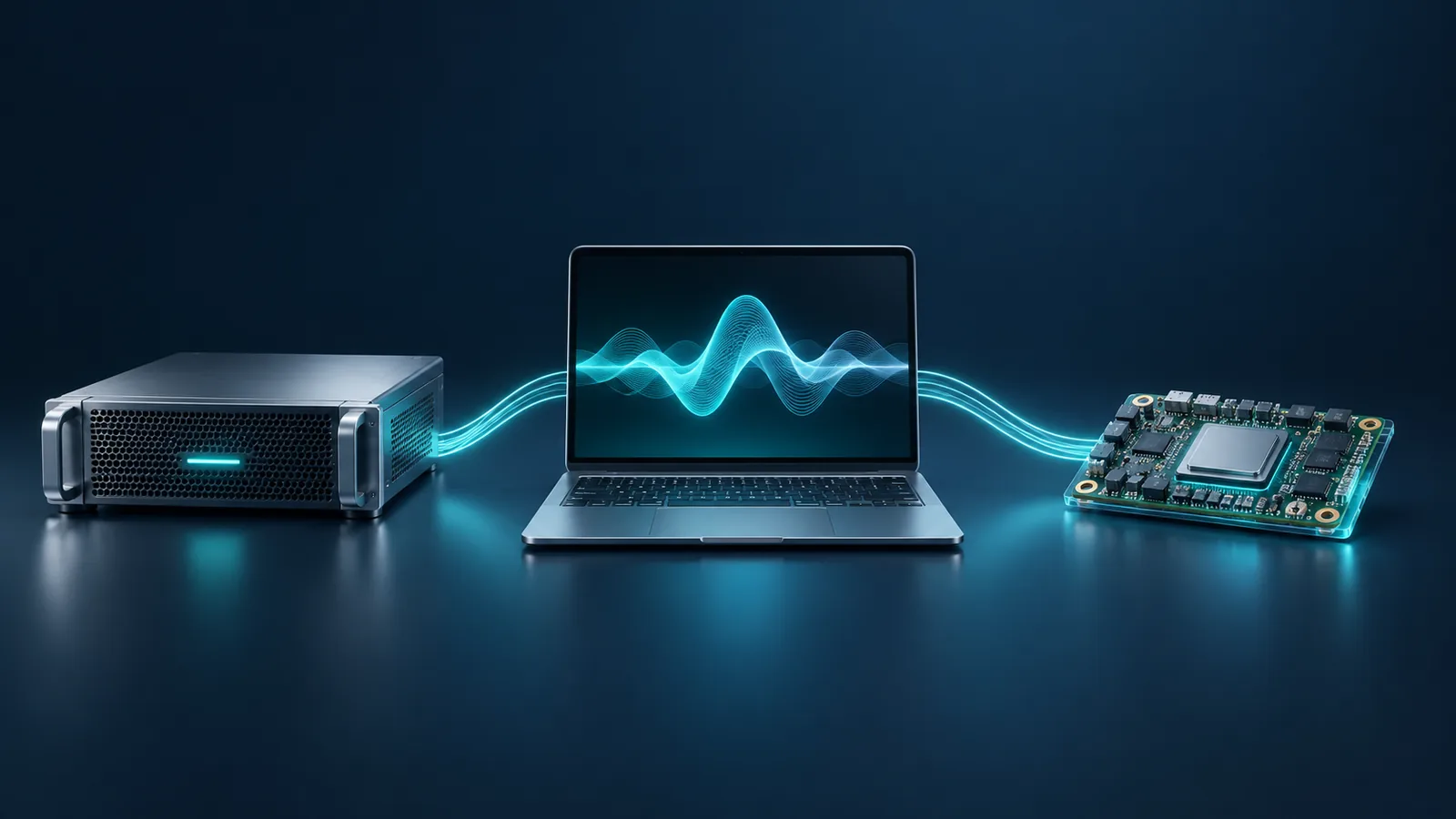
Processes audio files and continuous audio streams through an API. Suited to websites, mobile apps and business platforms, with centralized maintenance, unified configuration and room to scale.
Optimization focusCoordinating transfer and playback buffers, monitoring processing status and switching modes within a session.
Can be adapted for local computation according to project needs, purifying audio on the target device without uploading audio to a remote service or downloading results.
Optimization focusLocal file I/O and matching processing parameters to available compute, for restricted networks and on-device data retention.
Can be integrated into smart audio devices and dedicated hardware, with processing configurations chosen for the processor architecture, memory and power budget.
Optimization focusBlock size, buffer length, memory use and compute cost, balancing quality, latency and resource use on the target hardware.
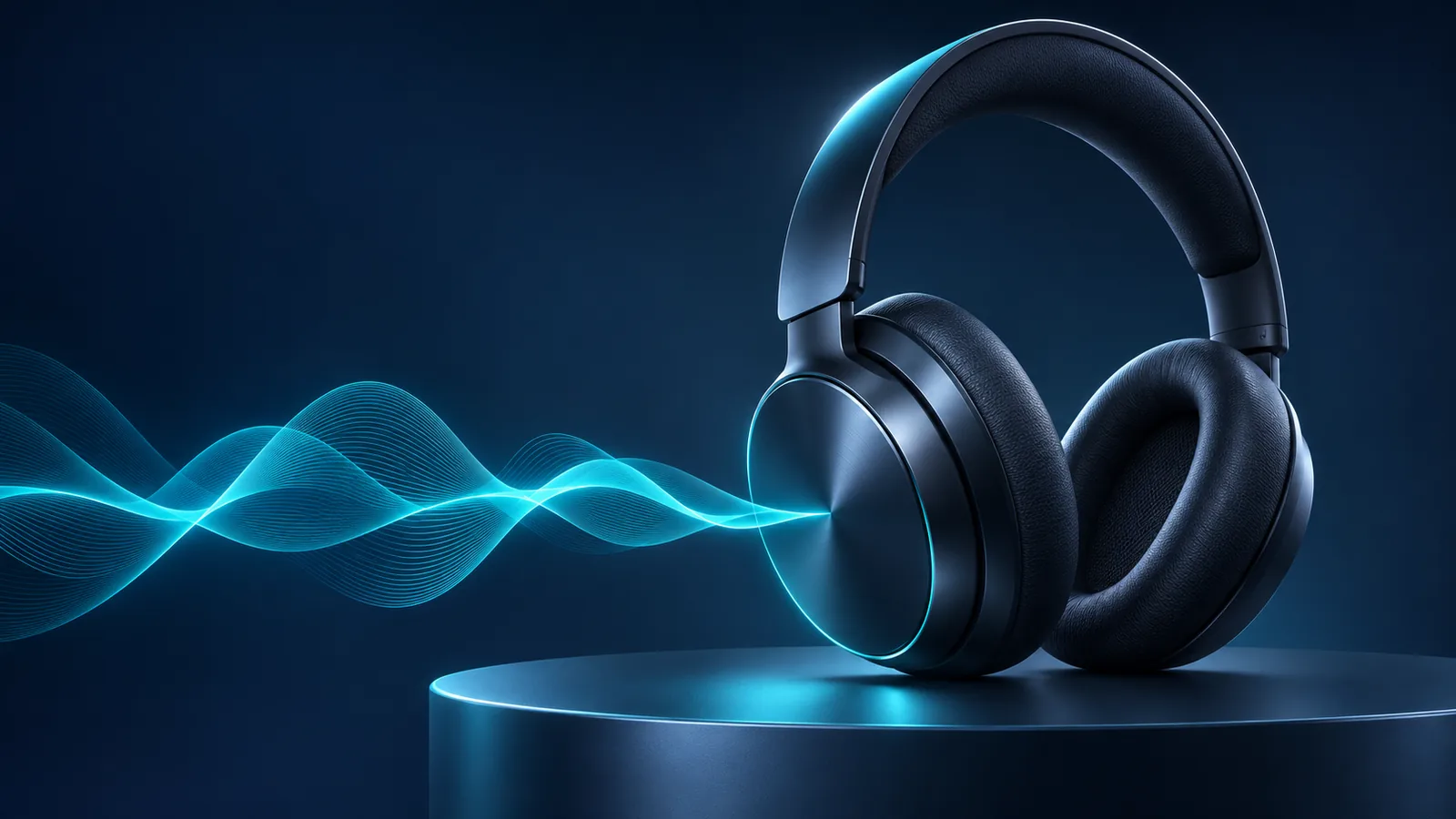
Bluetooth headphones
Audio can be purified on the source, such as a phone or player, and then sent to headphones over Bluetooth. On-device integration can also be assessed based on chip capability and partner firmware.
Source-side processing can work without modifying headphone firmware, depending on how much control the application has over the playback chain. On-device deployment must be validated against the chip, firmware interfaces and resource budget. This is purification of playback content, not active noise cancellation; it does not claim to reduce ambient noise heard by the wearer.

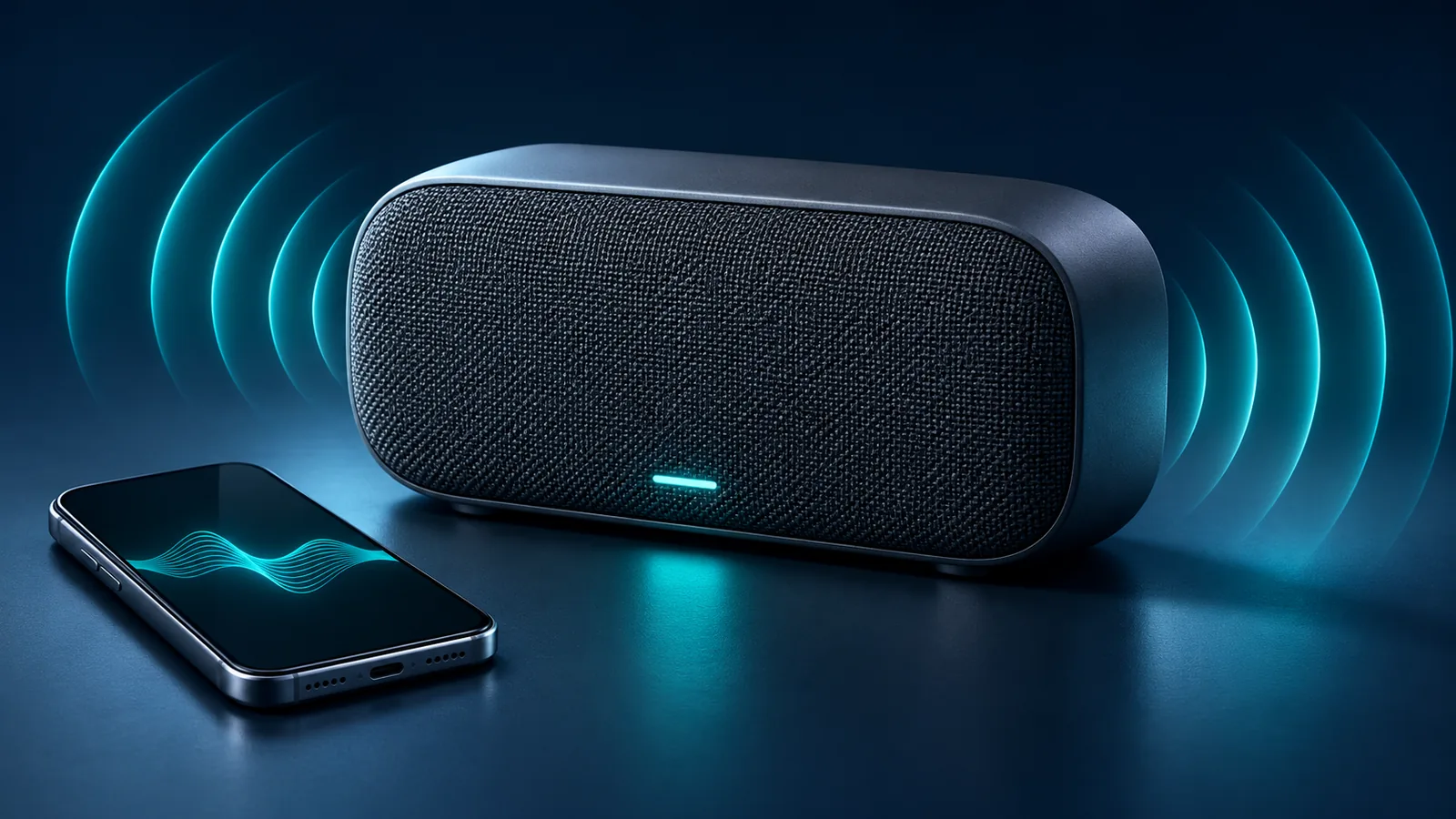
Bluetooth speakers
Audio can be pre-processed on a phone, media device or gateway before it reaches a Bluetooth speaker. For products with suitable integration conditions, deployment inside the speaker's processing chain can also be assessed.
For music, comparison with the original and level-matched listening help assess how well bass instruments, reverb and quiet details are preserved. Final results depend on the source, Bluetooth codec, speaker drivers and acoustic environment.


On silicon
We ported the audio purification algorithm to the NationalChip GX8002 low-power voice chip. Sample-by-sample processing runs on the CK804 MCU's DSP instructions and floating-point unit, with 48 kHz mono PCM16 input over I²S and 10 ms frames.
The algorithm keeps state across frames, allocates no heap in its core, and needs only 108 bytes of state per stream. The full firmware cross-compiles, links and packages successfully.
Impulse suppression and prediction.
Pre-emphasis, DC blocking and envelope detection.
Minimum tracking with adaptive smoothing.
Adjusted by scene and noise level.
Soft knee and level control.
Mixing of enhancement components.
Activity smoothing and transient handling.
Amplitude and slew-rate limiting.
18 setsComparison tests across 5 scenes, extreme settings and edge-case signals
432,000PCM samples compared
≤ 1 LSBMaximum sample difference from the reference implementation, with RMSE no higher than 0.025 LSB
Cross-compilation and host-side consistency checks are complete. Board audio output, per-frame time, end-to-end latency, power and real-world noise reduction still need on-board validation. Consistency results show the implementation matches the reference algorithm; they do not measure noise reduction or SNR gain. “Listening enhancement” is a scene name, not a medical function. Chip specifications follow the manufacturer's documents for the exact variant.
Identify noise types, source characteristics and target devices.
Provide before/after and level-matched listening to choose the right mode.
Decide where processing runs—online, local or embedded—and define interfaces.
Verify audio quality, latency, resource use and stability in the target environment.
Offline deployment can be adapted according to project needs. Available features and performance of an offline version are determined by delivery and acceptance on the target platform.
With source-side processing where the playback chain can be controlled, the receiving device usually needs no changes. Running inside the device requires an assessment of the chip, firmware and licensing conditions.
Choose according to the material. Stronger processing can affect high-frequency detail, reverb and low-frequency content; we recommend confirming parameters with level-matched comparison.
This technology purifies the audio content itself. Headphone active noise cancellation, microphone call noise reduction and echo cancellation are different capabilities that require separate assessment.
Contact and partnership
Share audio samples, your target platform and integration requirements, and we will assess processing results and deployment options together.
Email: contact@trtharbor.com
Rights in the original text, brand marks and software code independently developed by the company on this page belong to the company or the respective rights holders; actual ownership is subject to the facts and contractual agreements. Third-party software, components and technologies are used under their respective licenses, and related trademarks belong to their owners. The scope of software use, copying, distribution and commercial integration is governed by the applicable licenses and agreements between the parties.
Images on this page are AI-generated technical and product concept illustrations and do not represent products on sale, partner brands or measured waveforms.
Audio processing results depend on the material, noise type, parameters, device and deployment conditions. Specific features and performance are subject to the delivered version and acceptance in the target environment.